Research software · Platform direction

One energy system.
More ways to understand it.

H2 Intelligence is the direction of my research software: bringing offshore hydrogen, onshore hydrogen and hybrid microgrid studies into a common engineering and decision-support experience, while retaining independently testable simulation engines.

Platform integration is planned. Offshore and onshore now have distinct workspaces in the integrated desktop candidate; the shared microgrid platform and unified cross-domain model are not released.

Three complementary domains

One direction. Modular engineering foundations.

Each domain has its own physical and operational questions. The goal is to reuse what is common without compromising the models that make each system distinct.

≈Existing software

OffshoreH2

Chronological simulation of offshore renewable hydrogen production, buffering, liquefaction and export. The established OffshoreLH2 application provides the baseline; risk and multi-year research extensions are under development.

Wind & metoceanLH₂ / GH₂Marine logistics
Explore OffshoreLH2
◈Integrated research workspace

OnshoreH2

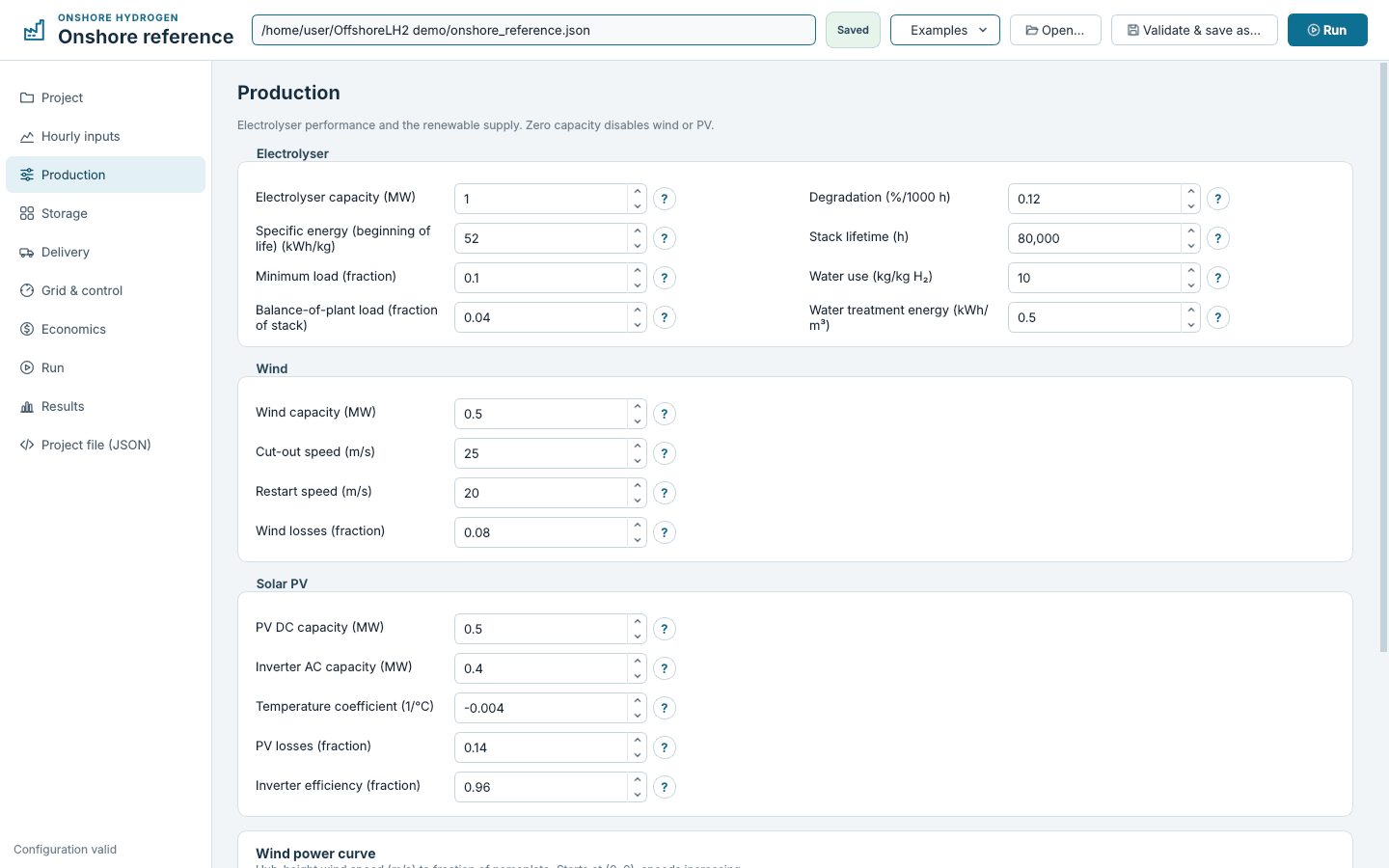
The integrated desktop candidate includes a separate onshore research workspace for wind, solar and grid-supported electrolysis, storage, GH₂ delivery and optional LH₂ trucking, with hourly inputs and financial screening. It is not the same physics engine as the offshore model.

Wind & PVGrid dispatchGH₂ delivery
See the onshore workspace
▦Existing research code

Microgrids / PGMcpp

Hybrid renewable microgrid models and research workflows for lithium-ion and vanadium flow batteries, converters, thermal-aware operation and load-following versus predictive control.

Li-ion & VRFBAC/DCMPC
Microgrid research

Integrated desktop candidate

Onshore hydrogen, its own engineering workspace

OffshoreLH2 can open the onshore workspace from its grouped sidebar. The workspace has a separate onshore model and project file, validated hourly input data, engineering forms, results and exports. This is not a claim that the offshore and onshore engines have been physically unified.

Onshore Production settings in a two-column design with electrolysis and power supply assumptions.
Production and supply. Define grid, wind, solar and electrolyzer inputs while preserving the project model.
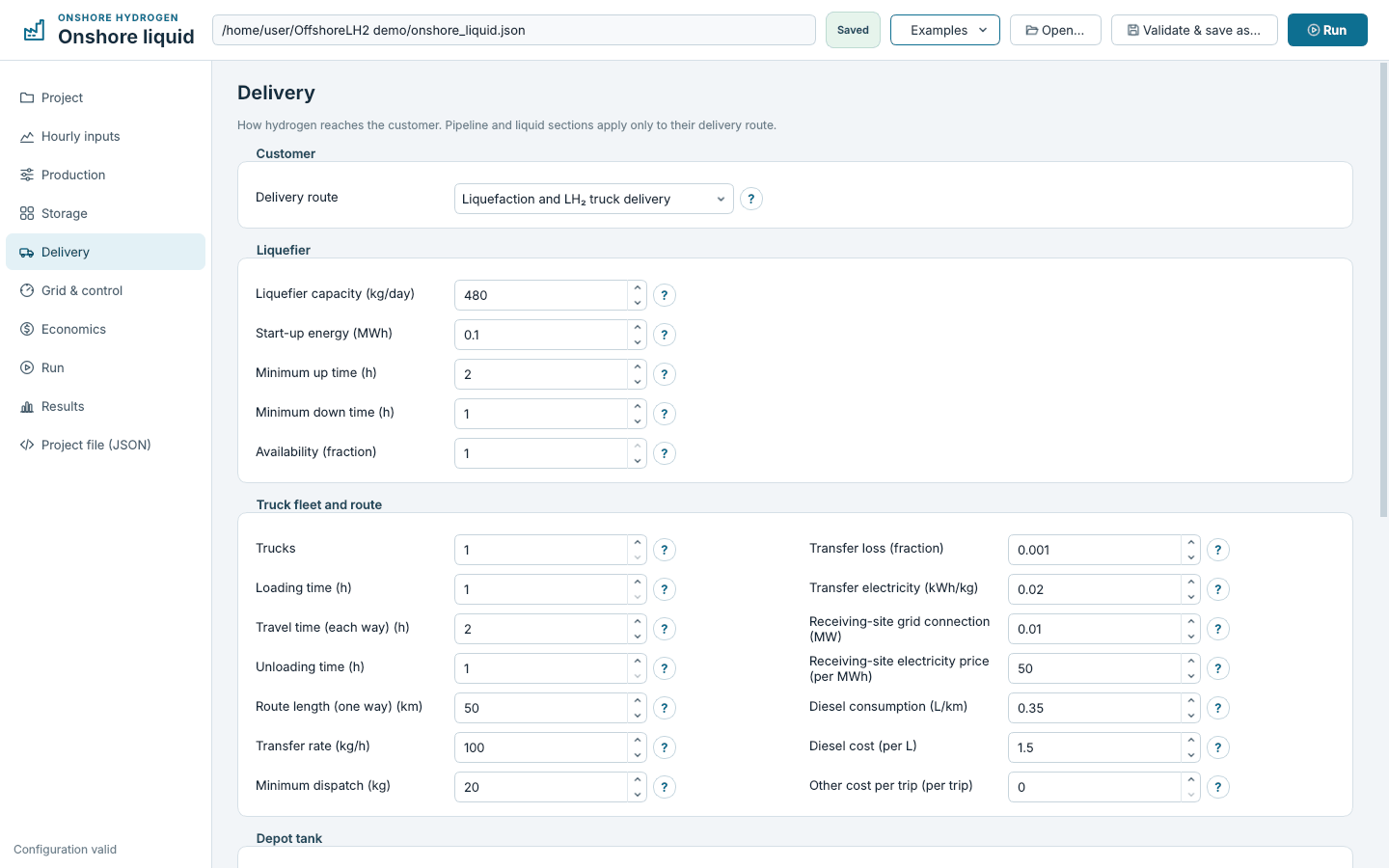
Onshore LH2 trucking settings with storage and delivery route controls.
Delivery route and storage. Configure the separate onshore delivery pathway with explicit engineering assumptions.
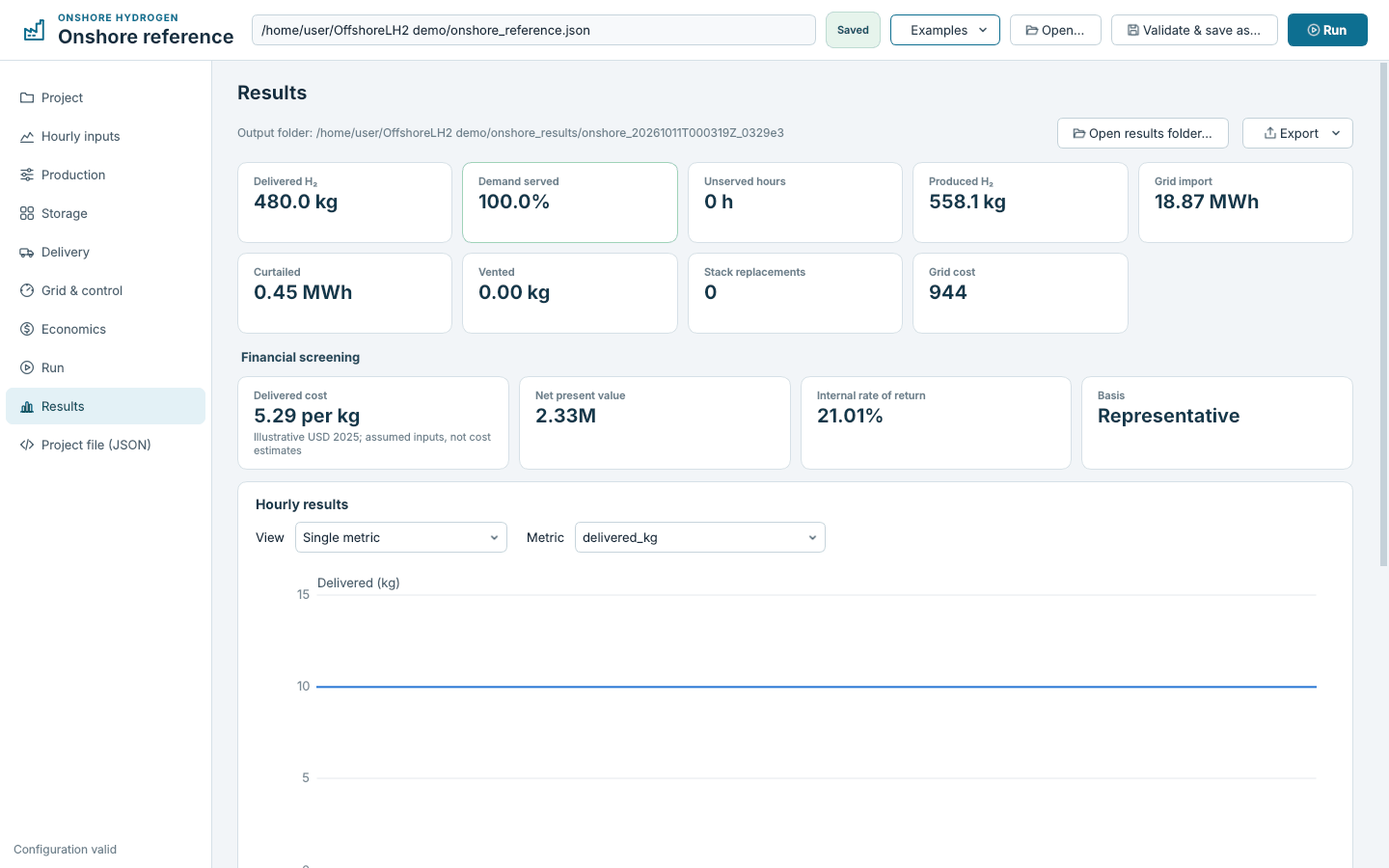
Onshore Results page with hydrogen delivery, grid import, indicative costs, NPV, IRR and an hourly plot.
Hourly results and financial screening. Screen operational and economic outcomes, then export a traceable result bundle.

Screenshots are from genuine development runs of bundled reference projects. Financial outputs are illustrative screening calculations based on declared input assumptions, not quotes, investment advice, or evidence of field performance. Release publication remains subject to licensing review.

The engineering idea

One workflow, without one monolithic model.

Integrating a hydrogen project with a battery, converter or microgrid should not require rebuilding the same component twice.

The proposed architecture keeps distinct simulation engines and adds compatible interfaces for component configuration, dispatch, reproducible studies, risk analysis and reporting. Results remain tied to their assumptions and verification status.

Not all proposed capabilities are currently connected. Model compatibility, solver licensing, source attribution and scientific validation are part of the integration roadmap.

PROPOSED STUDY WORKFLOW
01Define systemSite · Technology · Operation · Delivery
02Run physical simulationHourly balances · Constraints · Degradation
03Compare design optionsControl · Cost · Reliability · Uncertainty
04Document evidenceInputs · Assumptions · Reports · Reproducibility

Development status

An evolving research platform, not a finished commercial product.

Offshore and onshore now share desktop navigation and visual styling. Their physics remain distinct, and a unified cross-domain engineering engine and predictive-control framework remain planned.

01 / ESTABLISHED

Offshore simulation

Core offshore hydrogen workflows and a desktop research application exist today.

02 / PROTOTYPE

Onshore reference

Onshore design, delivery, hourly results and exports are integrated as a separate workspace in the desktop candidate.

03 / INDEPENDENT

Microgrid research

PGMcpp remains a separate codebase while reusable electrical models are evaluated.

04 / PLANNED

Unified experience

Common project navigation, component interfaces, predictive control and evidence views.

Research-stage disclosure. This page describes existing software alongside a future architecture. Descriptions are not claims of third-party certification, field validation or commercial readiness. Published research results and in-development code are distinct from an integrated software release.

Research collaboration

Connecting hydrogen systems and electrical energy storage.

Interested in the research, modelling methods or collaboration opportunities? Explore the current software or get in touch.